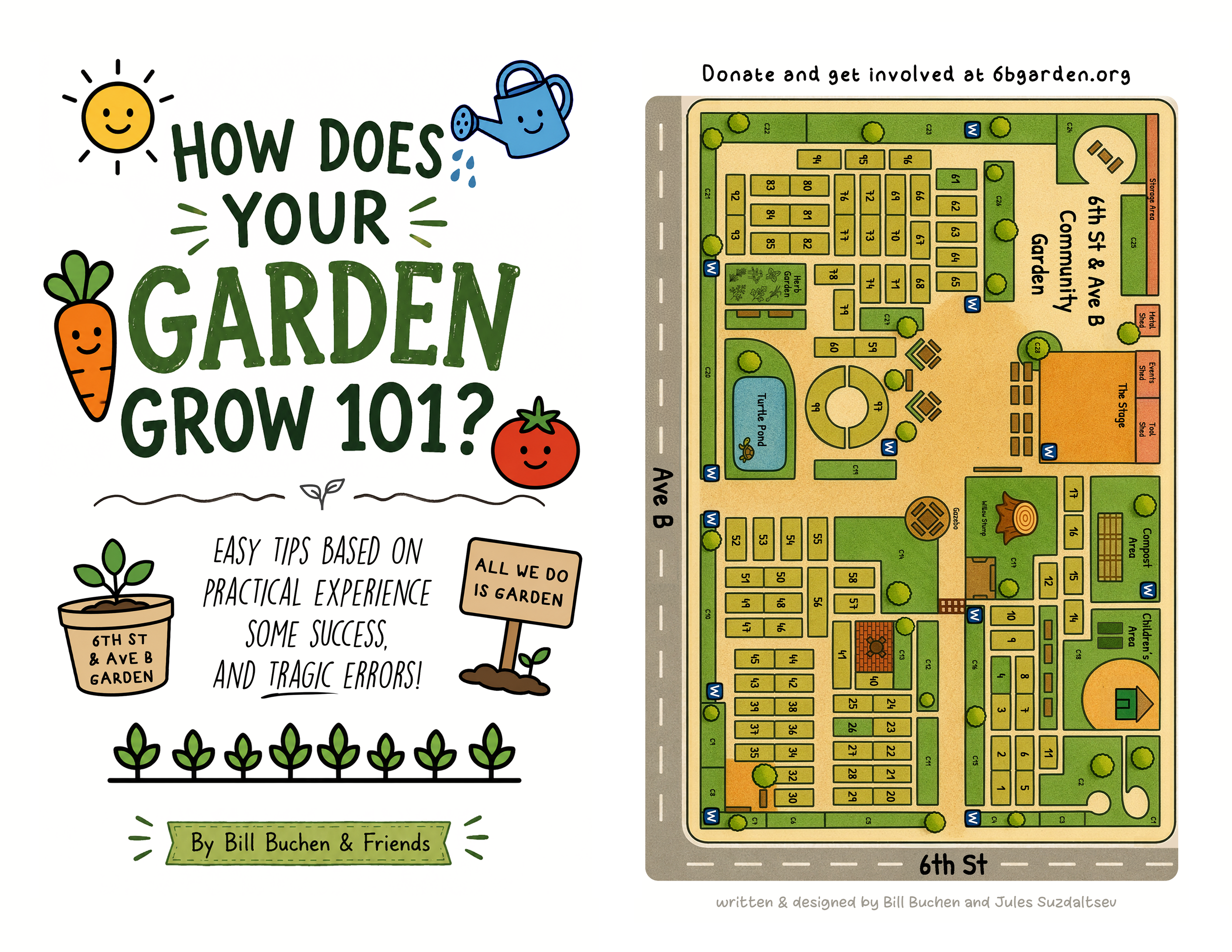
HOW DOES YOUR GARDEN GROW 101?
by Bill Buchen & friends
Easy tips based on practical experience, some success, and tragic errors!
PART ONE: THE GROUND RULES: AMEND THE SOIL
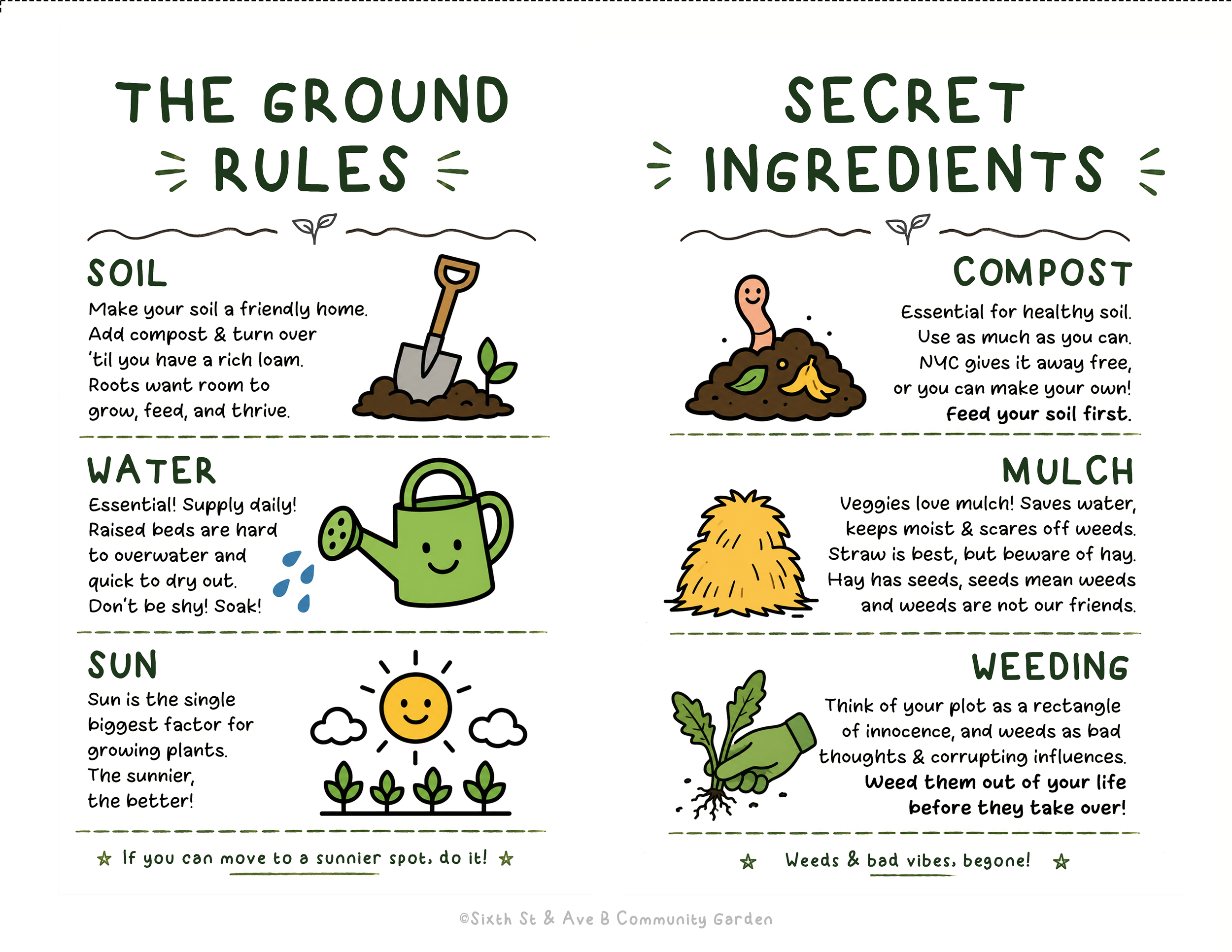
Add compost and turn it over till you have a rich loam. Roots want room to grow easily and need nutrition.
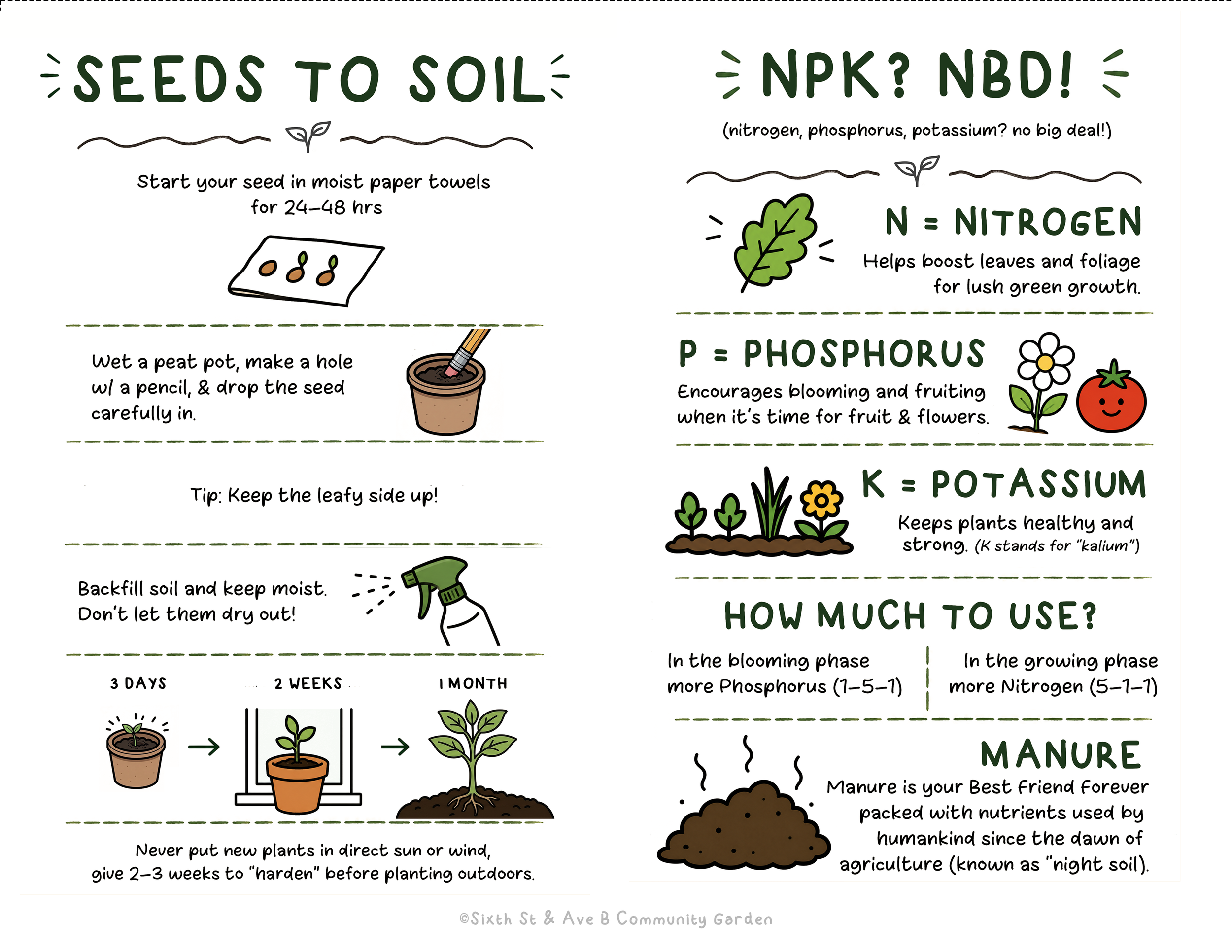
UNDERSTAND NPK
Nitrogen (N), Phosphorus (P), and Potassium (K): the three primary macronutrients in fertilizers, essential for plant growth. The numbers on a fertilizer bag represent the percentage of each nutrient by weight (10-10-10 means 10% N,
10% P, 10% K).
They ensure healthy foliage (N), strong roots and flowers (P), and overall plant stamina (K). In the growing phase, use more Nitrogen (5-1-1), in the blooming phase; more Phosphorus (1-5-1).
WATER
Essential. Try to supply daily. Raised beds dry out quick in summer heat. Find a neighbor to share watering duties -- your plants will thank you and so will your schedule. The exception is succulents and rock garden plants.
COMPOST
Essential for amending your soil. NYC (literally) gives it away at greenmarkets, garden centers carry it, and you can even make your own. It's free or close to it. Use as much of it as you can!
WEEDING
Think of your plot as a rectangle of innocence. Now think of weeds as bad thoughts and corrupting influences. Now weed those elements out of your life and cover with mulch! Begone!
MULCH
You can mulch most vegetable plants, except onions, which are too weak in the stem. Mulching saves watering, keeps moisture in and weeds down. It's a win/win. Straw is preferred. Hay has seeds, and seeds mean weeds, and weeds are not our friends. Leaves and pine needles are possible but can add acid.
MANURE
It's your Best Friend Forever! Seasoned year-old manure has no smell, is dry and crumbly, and it's packed with nutrients used by humankind since the dawn of agriculture (often known as "night soil"). Buy it online or at hardware and garden supply stores.
SUN
Sun is the biggest single factor for growing plants. If you're in partial shade, stick to leafy greens like lettuce, spinach, kale, and chard, alongside root crops such as carrots, radishes, and beets. The sunnier the better. If you can move to a sunnier spot, do it!
PART TWO: FROM SEED TO SOIL
Start seeds in moist paper towels in a plastic bag for 24-48 hours, then move them into "jiffy" or "peat pots." Wet the peat pot, take a pencil to make a hole, and drop the seed carefully in. Tip: keep the leafy side up! Gently backfill the hole. Place under grow lights 1/4" away. Mist every couple of hours so they don't dry out. Keep the lights on from 8am till 10pm.
In two weeks you get a hardy plant. In a month, start bringing them outside or setting them on an open windowsill to "harden them off." Never put new plants in direct sun or wind -- they need a 2-3 week adjustment period before they're ready for the outside.
PART THREE: THE CROPS
GARLIC
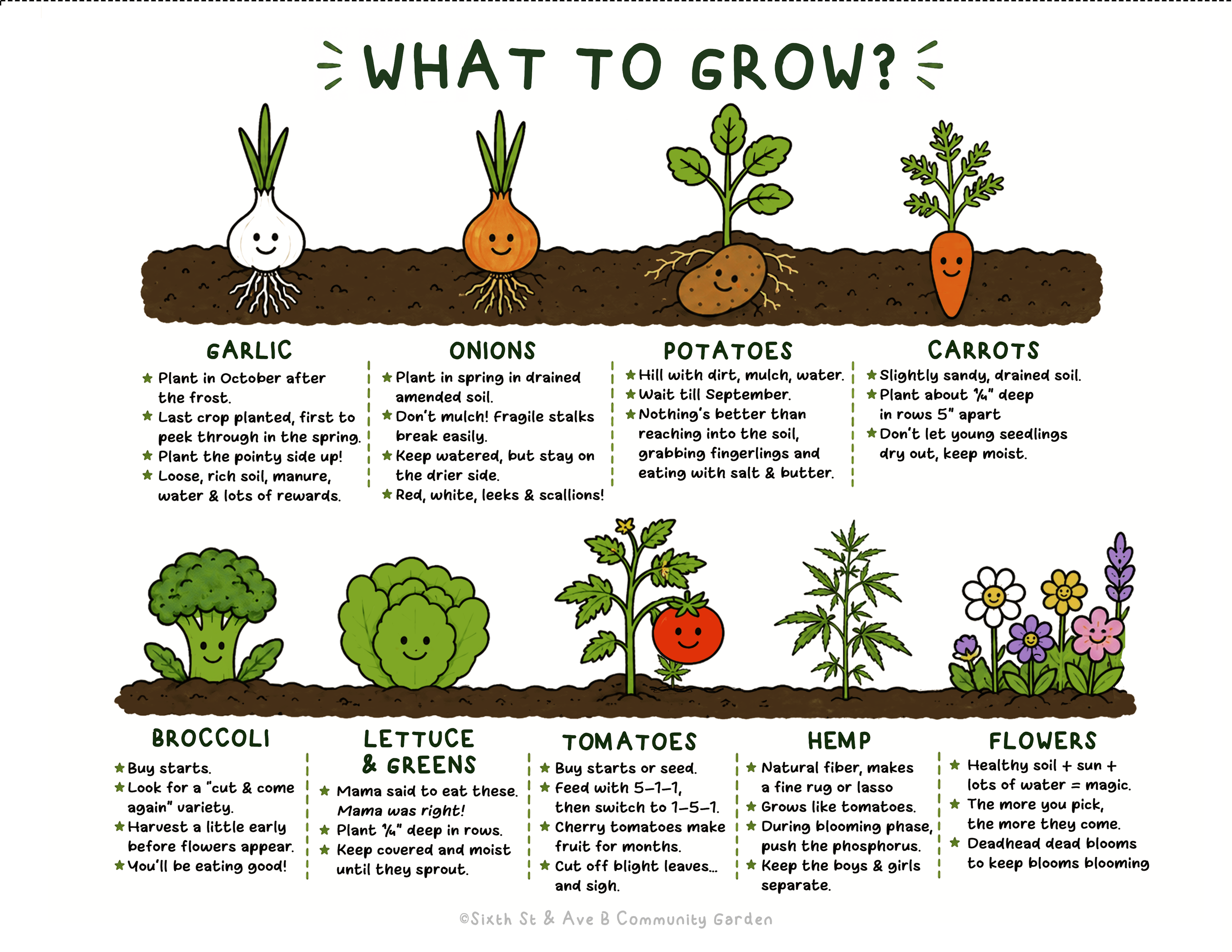
Garlic is easy to grow and has a lot of rewards. It's the last crop you plant (in October after the frost), the first crop to peek through the straw mulch in spring, heralding the end of winter! And it produces "scapes" in July that are great for pesto or stir fry.
There are two kinds: hard-neck (also called ortho) and silver-neck (also known as "supermarket garlic"). Both want loose, rich soil amended with manure or Espoma Plant Tone, and consistent water. Stick to East Coast stalwarts like Music and German White. There are more kinds than you can imagine... as the natives of New Guinea said: "We used to listen to the birds for signs, but there were too many birds!"
Tip: Plant the pointy side up!
ONIONS
The whole allium family does well here: red, white, bunching, leeks, scallions. Plant in spring in well-drained amended soil. Keep them on the drier side and do not mulch -- the stalks are fragile and will break under the weight. Water consistently and let the tops tell you when they're ready; when they fall over and dry out, you're close.
TOMATOES
The fall harvest beckons with its autumnal light, shorter days, and fecund fruit! A good haul means heirlooms: Cherokee Purple, Aunt Ruby's, Paul Robeson, and Amish Paste, plus a boatload of cherries: Sugar Rush, Bumble Bee, Sun Gold, Gardener's Delight, Black Cherry. Tomatoes are either determinate (fixed height) or indeterminate (no fixed height). Cherry tomatoes are indeterminate and will produce all summer. Buy starts or seeds. During the growing phase, feed them a nitrogen-forward fertilizer (5-1-1). Once you see flowers forming, switch to a phosphorus-forward bloom booster (1-5-1). Amend the soil with manure, Espoma Garden Tone, and Alaskan fish fertilizer throughout the season.The biggest issue is the dreaded blight (Fusarium Wilt) that has plagued tomato beds forever. There's nothing to be done, just cut off dead leaves and sigh.
very exciting!